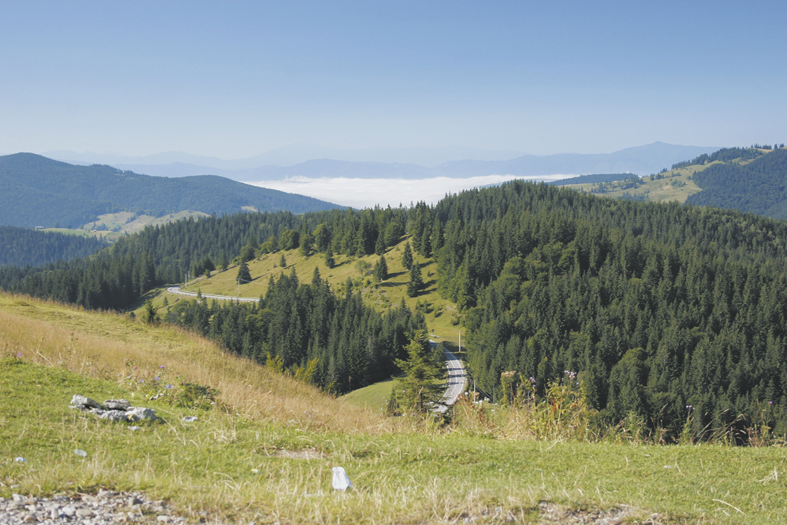
Romania is a diverse country. The southern Carpathians cut through it, creating sweeping hilly landscapes and a few mountains worth seeing. The Danube and its tributaries cut through the different levels. This results in three important regions: Wallachia, Bukovina and Transylvania.
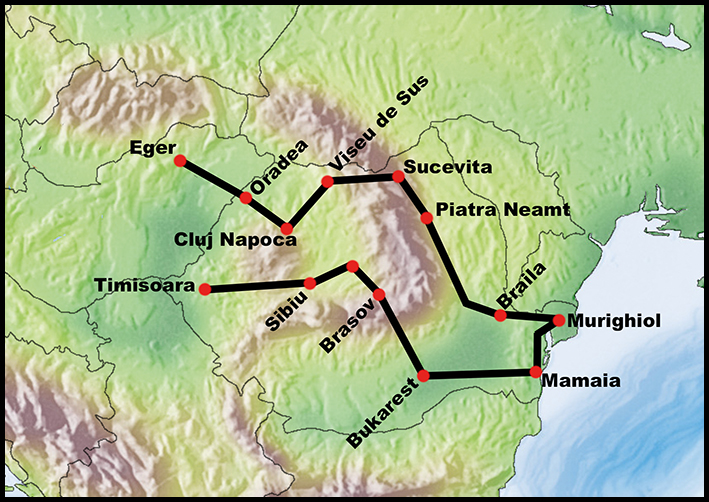
Starting clockwise, larger cities and historical landscapes alternate with impressive nature. Special highlights in the first third are Cluj Napoca, the Maramures with the ride on the forest railway and the Bukovina with the picturesque Vltava monasteries. Also in the green north are the Bicaz Gorge and the Danube Delta.
On this tour, you will visit regions of Europe that are incredibly diverse in terms of ethnicity, politics, and religion. Experience a blend of peoples and cultures—including Slovaks, Poles, Hungarians, Austrians, Russians, Germans, Romanians, Roma, Turks, and Jews, as well as Orthodox, Catholic, and Protestant communities. All of them have left their mark on the regions surrounding the Carpathians.
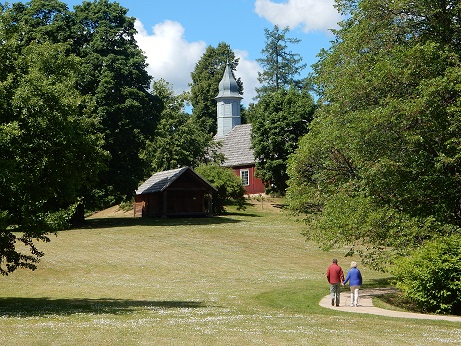
But rest assured, this is not intended to be a heavy-duty cultural tour. If you prefer enjoying beautiful landscapes, forests, and mountains, you certainly won't be disappointed. With mostly short travel stages, this trip offers plenty of free time—especially for hikers, cyclists, and photographers.
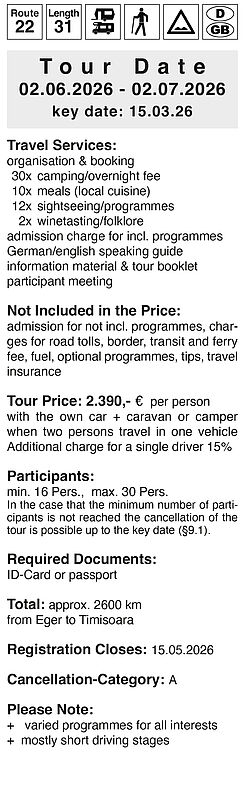
The winter sports resorts of the High Tatras are fantastic destinations in summer, too. For that part of the trip, we will swap the Ukrainian Carpathians for the flat plains of Hungary. Provided the current security situation allows, we will take a day trip across the Tisza River into the Ukrainian Carpathian Biosphere Reserve.
Romania is a diverse country. The Southern Carpathians run through it, creating sweeping hilly landscapes and impressive mountain scenery. We will visit the three most important regions: Wallachia, Bukovina, and Transylvania.
Highlights of this leg of the tour include Maramure?—with a ride on the forest railway—Bukovina and its picturesque Moldavian monasteries, and the 100-meter-deep Bicaz Gorge. The capital, Bucharest, offers a potpourri of modern capitalism, socialist grandeur, "wedding-cake" architecture, and French-influenced styles, alongside a few gems from the Ottoman and medieval eras. We can also marvel at the cities of Bra?ov and Sibiu—important trading hubs since the Middle Ages thanks to settlement by Transylvanian Saxons—as well as their historic centers, picturesque towns, and impressive fortified castles.
A few more relaxed days on the Black Sea, then it's off to the capital Bucharest, which offers a potpourri of modern capitalism, socialist swank and confectionery style, French-influenced architecture and a few gems from Ottoman and medieval times. Transylvania, with thriving cities such as Brasov, Sighisoara and Sibiu, became an important trading centre as early as the Middle Ages due to colonization from Central Europe. We can still marvel at the historic town centres, picturesque towns and impressive fortified castles.
Romanian cuisine is a kind of "Eastern Europe meets Balkans", hearty and delicious. Leisure time in beer gardens, at small markets, in large cities or in nature complete the programme.